A small audience does not mean your next release has to go unheard. If you want to promote a new song, start with the people who already care about your music. Give them a clear reason to listen, an easy link to use and a few chances to hear it. You can build a useful release plan without buying ads or posting all day.
The 100 fans in this guide are an example, not a target you must reach. You might have 20 regular listeners or 500 followers who rarely reply. Use the steps below to turn your next single into a simple week of stories, conversations and music.
1. Pick one goal you can track
Before you make a graphic or write a caption, decide what you want this release to do. A useful goal might be getting ten people to join your email list, hearing from five new listeners or finding two small music pages that want to share your song. Choose a goal that fits your stage.
Write down where you are starting. Keep a note of your followers, email subscribers and recent streams. Check the same numbers after the release. This gives you something clear to learn from. A large view count can look exciting, but comments from people who understood the song may tell you more about who your audience is.
2. Make the listening link easy to find
People should not have to hunt for your music. On release day, put a working song link in your profile and your main release post. If you use a page with several streaming options, put the new song first. Test the page on a phone before you share it.
Keep your artist name, song title and cover art the same across your posts. Use a short line to explain the sound or feeling. For example, you might describe a guitar song about leaving a draining job. A real detail gives someone a reason to try it. Check that your link goes to the right artist profile too.
3. Turn one song into three different stories
You do not need seven new ideas for seven posts. Choose three ways into the same song. The first could be a chorus clip. The second could explain the line that took the longest to write. The third could show a rough demo beside the finished recording.
Make each post useful on its own. Someone should enjoy the clip or understand the story even if they have never heard your name. Try a clear opening such as explaining who the song is for, or showing the lyric that changed during recording. Keep the music loud enough to hear and add readable captions where they help.
You can use the same chorus in different clips, but change the idea around it. Avoid sharing the same image and asking people to stream it every day. Read our social media guide for more ways to turn a song into posts people can respond to.
4. Talk to the fans who already respond
Look at the people who comment, reply to your stories or come to your gigs. These are the listeners who have already shown an interest. Reply to them in a warm, natural way. Ask which line they connect with or whether they prefer the demo or final version.
If someone has asked to hear your next release, send the link when it is ready. Keep that message personal and brief. Give people room to choose whether to listen or share. A real conversation is more useful than copying the same pitch into dozens of inboxes.
If you sell music on Bandcamp, check that your page is ready too. Bandcamp says it sends followers an email when you add a new release. Encourage interested listeners to follow you there so they can hear about later music. Use the official artist guide to check how its fan tools work.
5. Pitch to a small number of well matched music pages
Find a few independent music blogs, local music pages or playlist curators that already feature your kind of song. Read or listen to their recent work. Note how they accept submissions. A page with a smaller audience can still be worth approaching if those listeners enjoy your sound.
Your pitch needs the song link, a short description and a reason it fits that page. Add one detail about the song or your story that could help them write about it. Send a direct listening link rather than a large download. Keep a note of who you contacted so you do not send the same message twice.
If the release is still upcoming on Spotify, check the pitching option in Spotify for Artists. Its official guidance says to pitch an unreleased song at least seven days before release for followers’ Release Radar. Editorial selection is separate and is not guaranteed. Allow time for your distributor to deliver the track first.
6. Plan a week you can actually finish
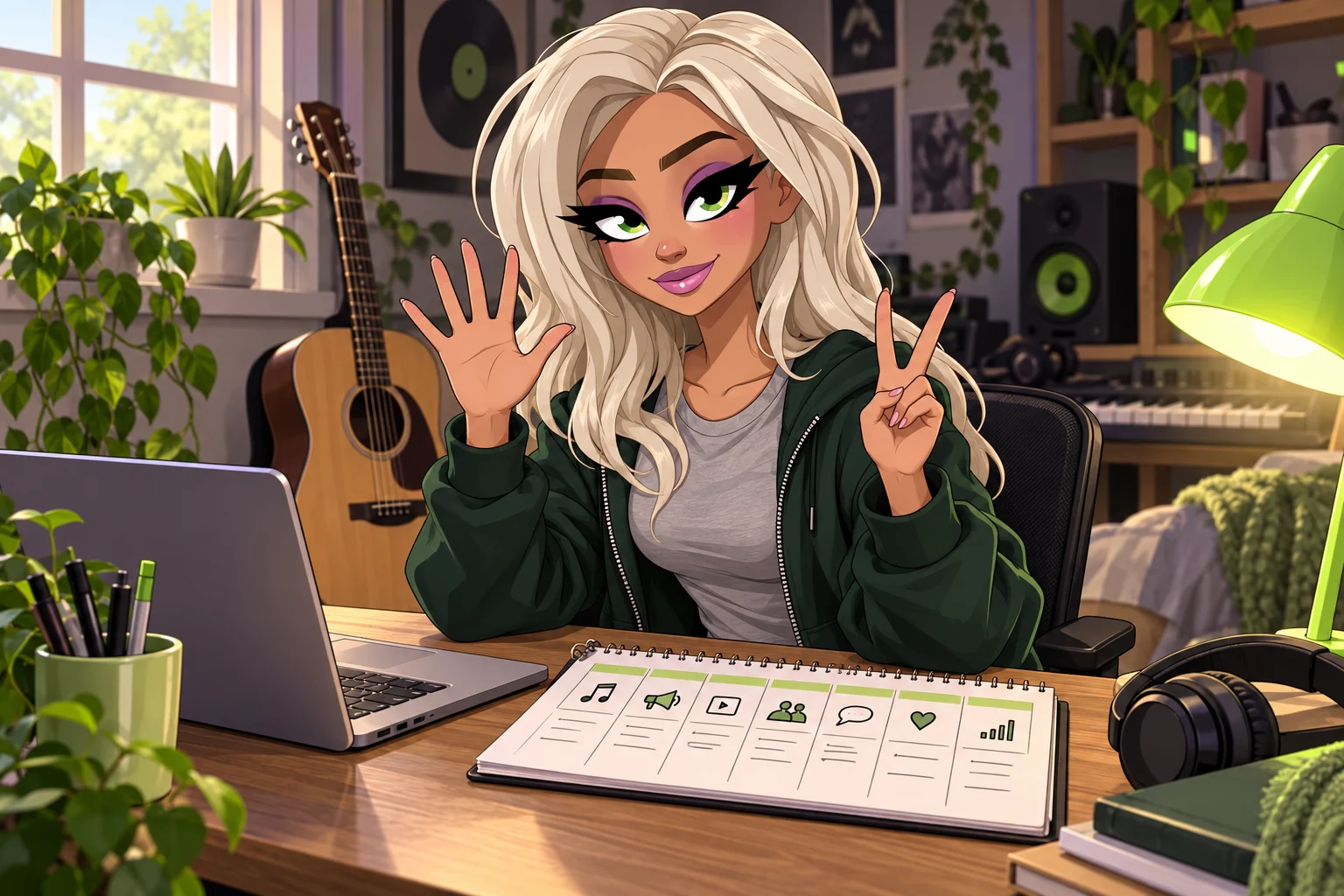
A small plan you finish is more useful than an ambitious one you abandon. Pick a few dates and prepare the main pieces before release day. This example leaves space for replies and changes rather than filling every day with sales posts.
- Three days before release, share the story behind the song and its release date.
- One day before release, share a short chorus clip and explain where people will find it.
- On release day, post the working link and thank the people who helped you make it.
- Two days later, share a demo clip, lyric story or different performance.
- At the end of the week, reply to listeners and review what worked.
You can stretch this over two weeks if that fits your time better. Save the captions, clips and links in one folder so you are not looking for files when you need to post. Leave time to make music as well as talk about it.
7. Keep the useful parts for your next release
At the end of the week, look at your goal and the replies you received. Which clip led people to ask about the song? Which music page responded? Did listeners use the link you shared? Pick two things to keep and one thing to change next time.
Do not decide your whole music career from one quiet release day. A song can still find listeners after its first week. Keep sharing it when you have a fresh story or performance to add. Your next release can build on the people you met this time.
Can you promote a new song without paid ads?
Yes. You can start with useful clips, direct fan conversations, well matched music pages and a clear listening link. Paid ads are an option, but they are not a replacement for knowing who your music is for. Use this plan first to learn what people respond to.
What should you do first today?
Choose one goal and test your listening link. Then make one short clip that gives someone a reason to care about the song. Those three tasks give you a starting point you can build on, even if your audience is still small.
More help for your release
Read our social media guide for emerging musicians.
Learn about getting your music onto Spotify playlists.